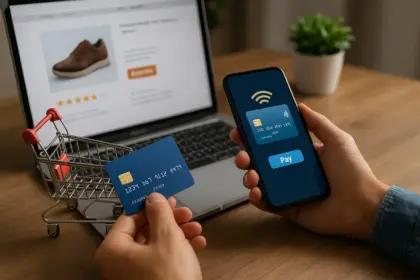

Online purchases often play out in just a few seconds. The customer has found the product, added it to the cart, checked the shipping terms, and is about to enter their payment details. At that moment, the experience can turn into a smooth and reassuring process or, on the contrary, a path full of doubts.
The payment experience includes the set of perceptions and feelings of safety that accompany the user from the cart to the order confirmation page. An e-commerce business that aims to build long-term trust must treat payment as an integral part of the service it offers.
A wide range of tools is available, but what really matters is how these tools are presented and made easy to understand. Three factors, in particular, weigh more heavily than others in the customer’s final judgment: payment systems, checkout simplicity, and the perception of security throughout the entire process.
1. Virtual POS and Integrated Payment Systems
The virtual POS for stores and e-commerce, unlike a physical terminal, is an online tool provided by credit institutions or specialized tech companies and can be connected to any online store. This solution allows customers to pay for their purchases conveniently, and merchants to receive funds directly into their business bank account. Through a virtual POS, the customer’s card data is handled securely, enabling the user to complete the transaction in just a few minutes from a computer or smartphone.
From the user’s point of view, everything happens within a payment page designed to work with the same immediacy they are used to on their smartphone: they enter their card details, confirm the operation, wait a moment for verification, and then see the order summary screen. Behind this simplicity is an infrastructure that communicates with the merchant’s bank and the customer’s payment network.
The virtual POS is connected to the e-commerce checkout page and, since it is a software solution, it does not require installing dedicated terminals or devices. A stable internet connection is enough for the platform to transmit the essential payment information, such as order number and amount. After clicking the payment button, the customer is redirected to a page managed directly by the bank, ensuring that card details are collected in a protected environment.
A decisive aspect concerns visual customization. Through the admin panel, the merchant can shape the colors, logos, and text of the payment page to match the store’s style. This gives the user a sense of visual continuity, prevents them from feeling as though they’ve been taken to a completely unfamiliar environment, and helps them feel more at ease when entering their data.
Technical security relies on encrypted connections and SSL certificates that make card information unreadable to unauthorized parties. After the data is entered, the bank performs the necessary checks and returns a response within a few moments. The customer is redirected back to the e-commerce site, sees the purchase confirmation, and receives a receipt by email, while the merchant is notified of the successful payment.
2. Simplicity of the Checkout Process
The second factor that affects the customer experience concerns the structure of the payment flow. A confusing checkout with too many screens, unnecessary fields, or unclear messages should be avoided.
It’s clear that if a visitor is required to create an account, go through three or four pages before reaching payment, fill in long forms, and read unintuitive phrases, they are very likely to abandon the cart. On the other hand, when the process is simple, with few steps and clear instructions, the positive perception increases immediately.
3. Security, Trust, and Customer Communication
The third factor concerns the feeling of security that accompanies the customer while entering their data and confirming the payment. Beyond the technical protection of data—already ensured by protocols and certifications—it’s about how this protection is communicated.
Users will feel protected if they see clear references to SSL certificates or lock icons that guarantee secure transactions and data confidentiality.
Error messages also play an important role. If the system clearly indicates what went wrong (such as an expired card, insufficient funds, or incorrectly typed information) and suggests how to fix the issue, the customer feels guided toward completing the process correctly.