The Shift Toward Resource-Efficient Structures
For years, Lean Thinking has been shaping both production and service industries. In 2026, however, we are witnessing a turning point: global supply bottlenecks, volatile markets, rising energy prices, and rapid progress in artificial intelligence are forcing companies to rethink their structures. Lean 2026 is not just about streamlining processes—it’s about building resilience that endures under pressure.
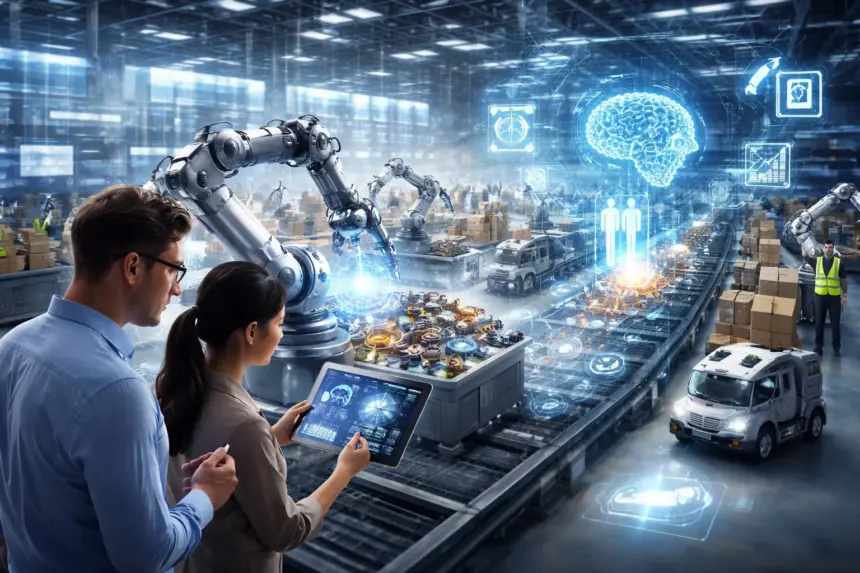
The companies that lead today combine digital technology with consistent waste reduction. Sensors, automation, and adaptive systems generate real-time data that reveal bottlenecks before they emerge. This is the essence of modern Lean approaches: continuous improvement driven by objective, data-based insights.
Importantly, this movement extends far beyond manufacturing. Finance departments, HR, and supply chain management now benefit from clearly defined value streams, precise standards, and a trained eye for unnecessary workloads or redundant steps. In this setting, Lean Management Seminars have become increasingly vital—they teach not only methods but also empower teams to apply digital tools to make workflows more stable, transparent, and resilient.
Why Resilience Is Central in 2026
In Germany, recent years have brought dramatic change. Global crises have exposed the limits of rigid structures. Resilience now means designing an organization that can adapt without falling into paralysis or chaos.
Here, Lean Management provides a powerful framework for systematically identifying and eliminating waste—overproduction, waiting times, unnecessary transport, process errors, and underused employee potential. What’s new in 2026 is the integration of Lean principles with digital analysis tools. Artificial intelligence reveals patterns that once stayed hidden—in supply chains, machine utilization, or customer feedback.
Organizations embracing this mindset are not only improving productivity in the short term but becoming more stable and competitive in the long run. They build systems that remain adaptable without losing clarity or output—a crucial asset in a globally interconnected market.
Lean Management as the Foundation of Digital Transformation
Digital transformation is advancing faster than ever in 2026. Yet without a clear method, digitalization easily becomes an end in itself. It is Lean Management that ensures digital technology creates real value where it truly matters. Sensors, AI analytics, and automated planning tools deliver tangible results only when aligned with well-defined value streams.
Consider this example: manufacturing firms increasingly rely on predictive maintenance systems to monitor equipment health in real time. Without a solid Lean foundation, this can create new forms of waste—too much data, duplicate analysis, or chaotic reporting. Lean principles ensure that data quality translates into measurable progress.
Service industries face a similar scenario. Digital interfaces, chatbots, and AI-driven analytics unfold their full potential only when every process is designed for value creation. Lean provides the framework that prevents automation from creating new bureaucracy instead of solving problems.
A Learning Culture and Continuous Training as the Key to Future Readiness
Modern organizations thrive on continuous training. Lean methods are not a one-time project—they require an ongoing culture of learning. Leaders and employees alike must be capable of identifying and implementing improvements on their own.
A good seminar today goes far beyond teaching methodology: it connects classic tools such as value stream mapping, 5S, or Kaizen with new technologies. The focus lies on interpreting data, making evidence-based decisions, and guiding change effectively.
In Germany, where small and medium-sized firms form the backbone of the economy, practical training has become a decisive competitive advantage. Those who understand Lean principles and combine them with digital thinking adapt faster to disruption—and secure the long-term viability of their company.
The Synergy Between AI and Lean Thinking
Artificial intelligence has changed how we understand work. In the past, experienced professionals needed years to identify recurring patterns or inefficiencies. Today, AI analyzes production flows, deviations, and quality data in seconds. Yet without clear direction, even AI can create inefficiencies of its own.
Lean 2026 therefore means combining human creativity with algorithmic precision. AI systems highlight patterns, predict outcomes, and suggest improvements—but humans remain the decision-makers who apply Lean principles to determine which changes truly add value.
This partnership minimizes waste at every level and strengthens an organization’s ability to adapt quickly. The result is a company culture that is both data-driven and people-centered—a clear alternative to rigid, hierarchical systems of the past.
The Outlook – Lean as the Foundation of Sustainable Management
2026 marks a new era in the evolution of Lean principles. More and more companies now realize that continuous improvement and sustainability are not contradictory—they complement each other. Those who manage resources intelligently, maintain streamlined processes, and prioritize learning over control achieve economic and environmental gains alike.
Lean thinking is thus becoming the foundation for modern sustainability strategies. Waste-free processes mean lower energy use, less material consumption, and more stable supply chains. Combined with AI, these goals can now be measured and monitored in real time.
The Lean system of the future will be both economically sound and socially balanced. Employees will play an active role, their ideas systematically integrated, and their knowledge shared across digital value networks.
Conclusion
Lean 2026 stands for far more than process optimization. It represents a mindset that unites people, technology, and organization. By combining resilience, advanced training, and artificial intelligence, companies can reduce waste, increase value, and strengthen their long-term position in Germany’s competitive landscape. Those who invest today in learning, structure, and digital transformation are building the foundation for enduring success.