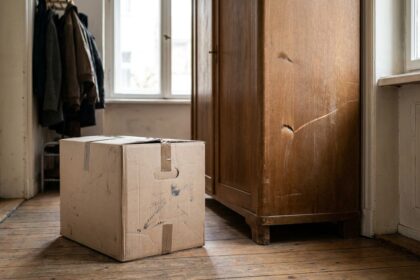
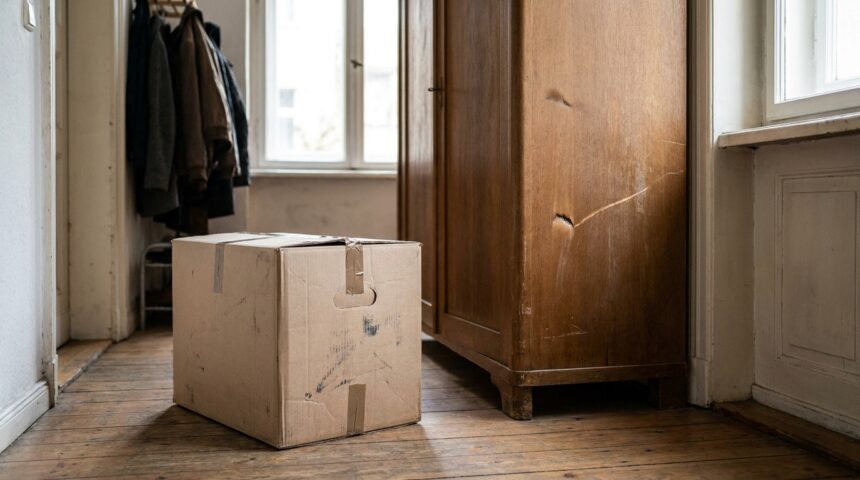
620 euros per cubic metre of loading space is the ceiling; as a rule, a moving company does not have to pay more than that for transport damage during a move. What the damaged piece of furniture once cost is irrelevant here. Anyone who knows this figure before the truck pulls up negotiates differently. And anyone who knows after the move which deadlines are running does not lose their claims through carelessness.
What follows is the legal situation on moving damage plus a fixed procedure: the four-step damage protocol, rounded off at the end with a checklist to tick through. Everything here is general information and not legal advice.
Why a move is legally a freight transaction
A removal contract is not a service contract in the everyday sense but a freight contract. The German Commercial Code (HGB) governs the transport of household goods in Sections 451 to 451h HGB, supplemented by the general provisions on the freight transaction. In the wording of the law, the customer is the consignor and the company the carrier. From this follows a strict rule: the moving company is generally liable for the loss and damage of the household goods in the period between takeover and delivery, even without fault of its own.
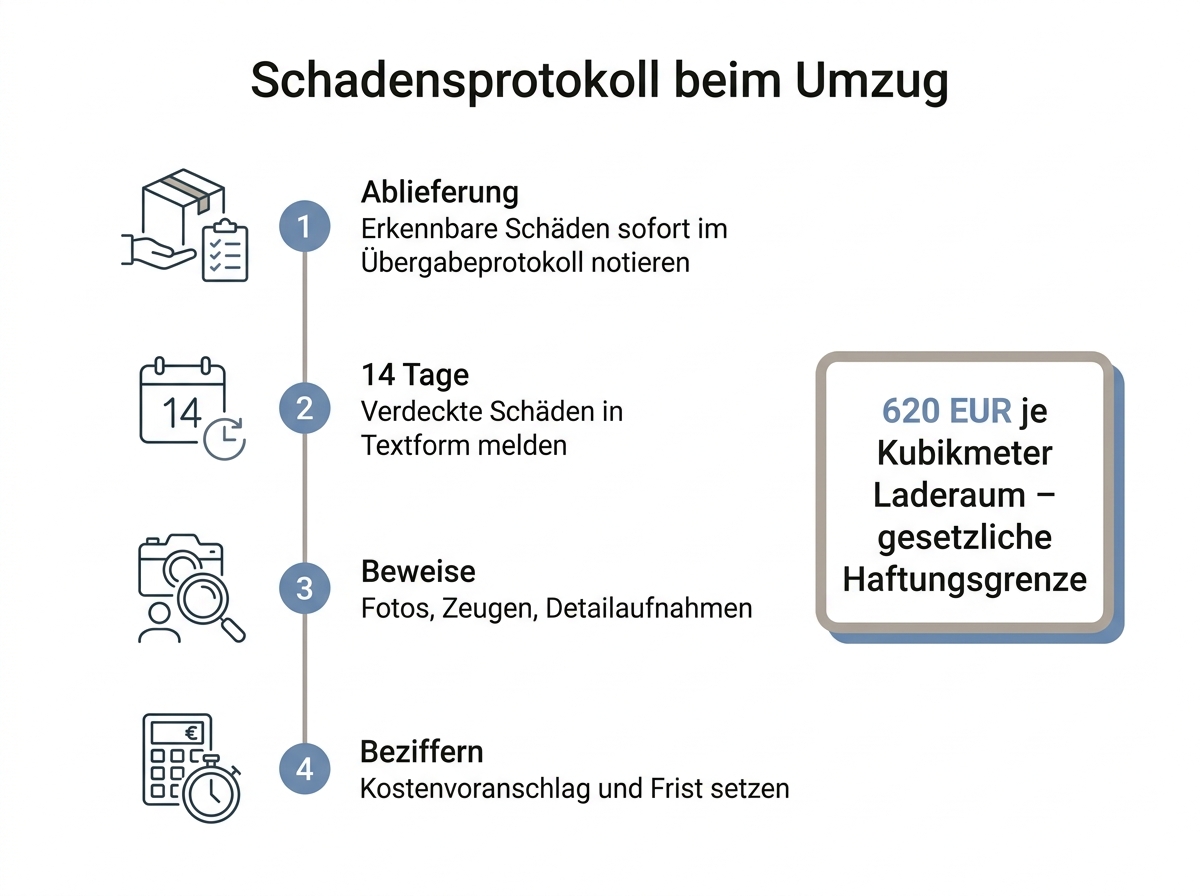
The price of this strict liability is its limitation. Section 451e HGB caps it at 620 euros per cubic metre of loading space required to fulfil the contract. A move of 30 cubic metres thus amounts to a liability sum of 18,600 euros, and that applies to the entire order, not per item.
That is enough for most households. It gets tight with little volume and high value, for instance when expensive electronics and a collection travel in just a few boxes. There, the real value quickly exceeds the statutory limit.
What the moving company replaces and what it does not
Not every scratch is the company’s responsibility. Section 451d HGB names special grounds for exclusion under which the carrier is released from liability. Three of them are particularly relevant in practice:
- Self-packed boxes: if the customer packs their own goods and something breaks in the process, the risk lies with them. The same applies to inadequate packaging or missing labelling.
- Lending a hand yourself: anyone who helps with loading or unloading or handles items themselves takes a share of the responsibility off the moving company.
- Valuables and delicate goods: money, jewellery, precious metals, securities, documents, live animals and plants fall under the exclusions. Such things belong in your own car.
The carrier is also released in the event of unavoidable circumstances that it could not have averted even with the utmost care, for instance a storm during transport.
When does the liability limit of 620 euros per cubic metre no longer apply?
In the case of intent or particularly gross negligence, the liability limit falls away, and the moving company is then liable for the damage caused in full. And if the consignor is a consumer, Section 451g HGB requires clear disclosure: at the conclusion of the contract, the customer must be informed about the liability provisions and about insurance options. If this disclosure is omitted, the company cannot invoke the limitation, and the customer’s claims are governed by the general rules.
Before booking: how to recognise proper liability
The moving company’s liability hinges on information that arises long before the moving day. There are four signals you should watch out for when selecting a provider; they say more about the later settlement than any star average:
- A written offer with the scope of services. It states who packs, who carries, who dismantles, and with what volume in cubic metres the calculation is made. This figure is later the basis for calculating the liability sum.
- An inspection before the offer. Anyone who has never seen the household estimates the volume. Regional firms usually treat the on-site appointment as a matter of course, for example a reputable moving company in Stuttgart that records the household contents in advance and sets down the result in the offer.
- Clear details on liability and insurance cover. The reference in text form to the 620-euro limit and to the option of additional transport insurance is part of the mandatory programme, not the fine print. Anyone comparing several offers should compare precisely this point.
- A named contact for damage. Ask beforehand where a damage report goes and in what form. Anyone who has no answer to this will not provide one afterwards either.
The four-step damage protocol
If something has happened, the first hour is decisive. This procedure meets the statutory deadlines and produces the evidence that counts later.
Step 1, delivery: record externally visible damage immediately. Obvious damage must be reported at the latest on the day of delivery, that is on the unloading day itself and not the next morning. Note the damage on the handover protocol specifically and with a location: “Living-room cabinet, right side panel, 8 cm dent, occurred during unloading.” Have a copy given to you or photograph the signed sheet.
Step 2, hidden damage: the 14-day deadline. Anything that only shows up during unpacking must be reported within 14 days of delivery, in text form by email or letter. If you miss this, it is presumed that everything arrived undamaged. The exact wording is in Section 451f HGB. Conversely, the company must inform the recipient about the form and deadline of this damage report at the latest at delivery.
Step 3, secure evidence. Photos of the undamaged item before loading are worth a great deal, which is why they belong in every survival guide for moving. After the damage, detailed shots and an overall view with a scale follow, plus the names of the helpers present as witnesses. Label the files by room and item, otherwise you will not find anything again in three weeks.
Step 4, quantify the damage. A cost estimate from a workshop or a restorer turns a nuisance into a verifiable claim. With older furniture, the question of current value or replacement value comes up; here it pays to look at your own policy. Set the moving company a reasonable deadline to respond; two to three weeks is customary.
Transport insurance, household contents, liability: who pays when?
Four types of cover are regularly confused. Anyone who wants to take out additional transport insurance should first know what the statutory liability for moving damage already covers:
| Cover | Applies to | Typical limit |
|---|---|---|
| Statutory liability of the moving company | Loss and damage of the household goods between takeover and delivery | 620 euros per cubic metre, exclusions under Section 451d HGB |
| Voluntary transport insurance | Taken out additionally, often at replacement value, also in cases excluded from liability | agreed insured sum |
| Household contents insurance | Moving transport usually only to a limited extent, plus a transitional period in the new home | depending on the terms, pure transport damage often excluded |
| Company’s public liability insurance | Damage to buildings and third-party property, for example in the stairwell | contractually agreed sum insured |
Moving insurance, correctly transport insurance, is the classic route when the value of the household contents clearly exceeds the statutory limit. It is usually arranged through the moving company but can also be taken out separately. Report the move to your own household contents insurer in any case, otherwise cover in the new home is on shaky ground.
Damage during a move with private helpers
Anyone who moves with friends instead of a moving company has no freight contract and therefore no statutory liability to fall back on. If a helper causes damage, in the best case their private liability insurance steps in. Many policies, however, exclude gratuitous favours, and without insurance all that often remains is to forgo claims. A brief consultation with your own insurer before the moving day costs nothing and clarifies who steps in should damage occur.
Damage to the stairwell is a separate case
The scratch in the handrail, the chipped wall paint on the fourth floor: such damage does not affect the household goods but the building. It therefore does not run through the 620-euro limit but through the company’s public liability insurance or, with private helpers, through their private liability insurance.
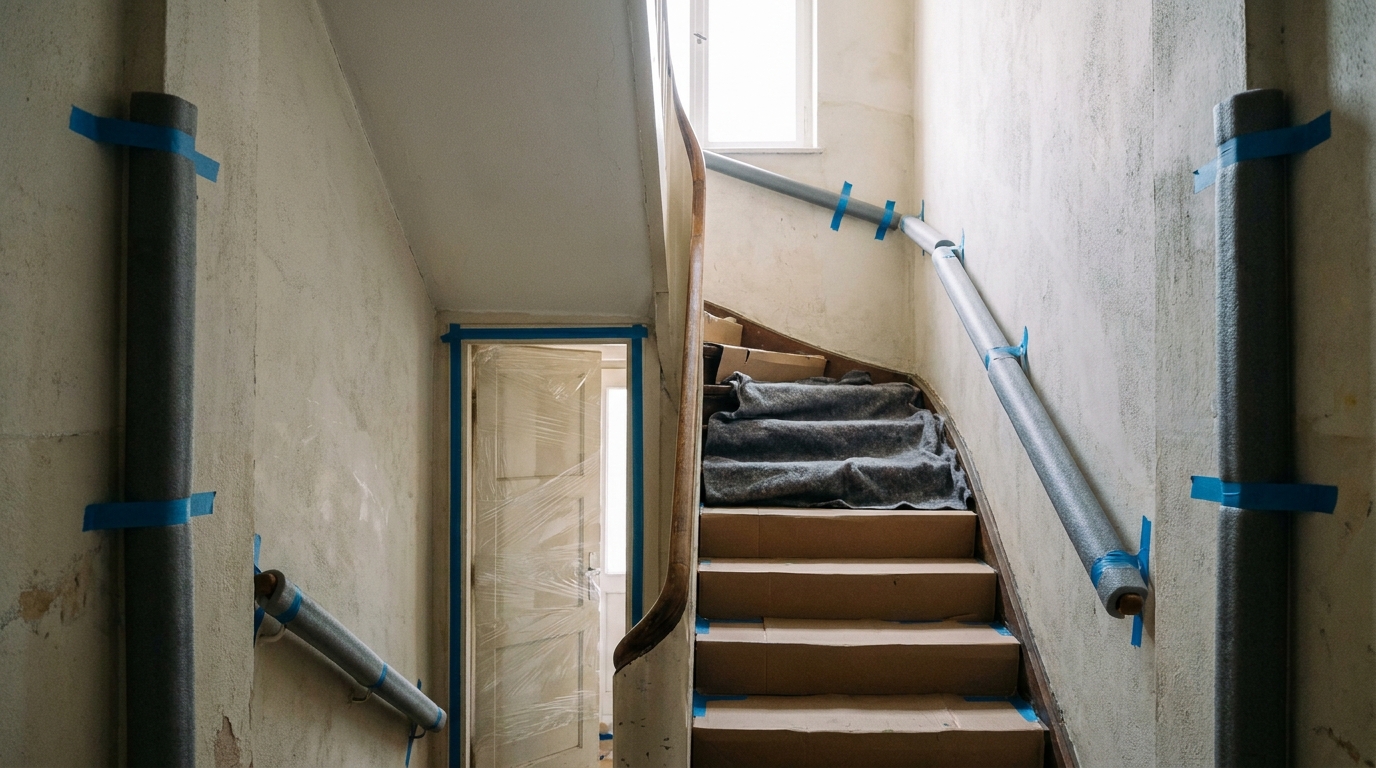
For tenants this is tricky, because the landlord turns to them first. Two things help: photos of the condition of the stairwell before the move and a brief written report to the property management and the company on the same day. Anyone clearing out anyway can take the quiet path of decluttering and carry less through the building. That reduces the risk along the way.
Checklist: transport damage during a move
- Volume in cubic metres is stated in the offer
- Reference to the liability limit and additional insurance is available in text form
- Valuables, documents and jewellery travel in your own car
- Photos of all valuable items before loading
- Fill in the handover protocol on the unloading day, keep a copy
- Report externally visible damage immediately at delivery
- Report hidden damage within 14 days in text form
- Compile detailed photos, witnesses and a cost estimate
- Submit the claim in writing with a deadline
- If rejected, involve the consumer advice centre or legal advice

This protocol costs half an hour, and later it is precisely on this that whether a claim is paid or rejected depends. Anyone who prepares for the move as thoroughly as for a move to a new city has already dealt with half the points.